
Pigmentation, Tattoo & Hair Removal · Seomyeon, Busan
Tattoo Removal in Busan
#LaserTattooRemoval · #PigmentBreakdown · #RepeatedSessionsForBetterResults · #PartialRemovalPossible
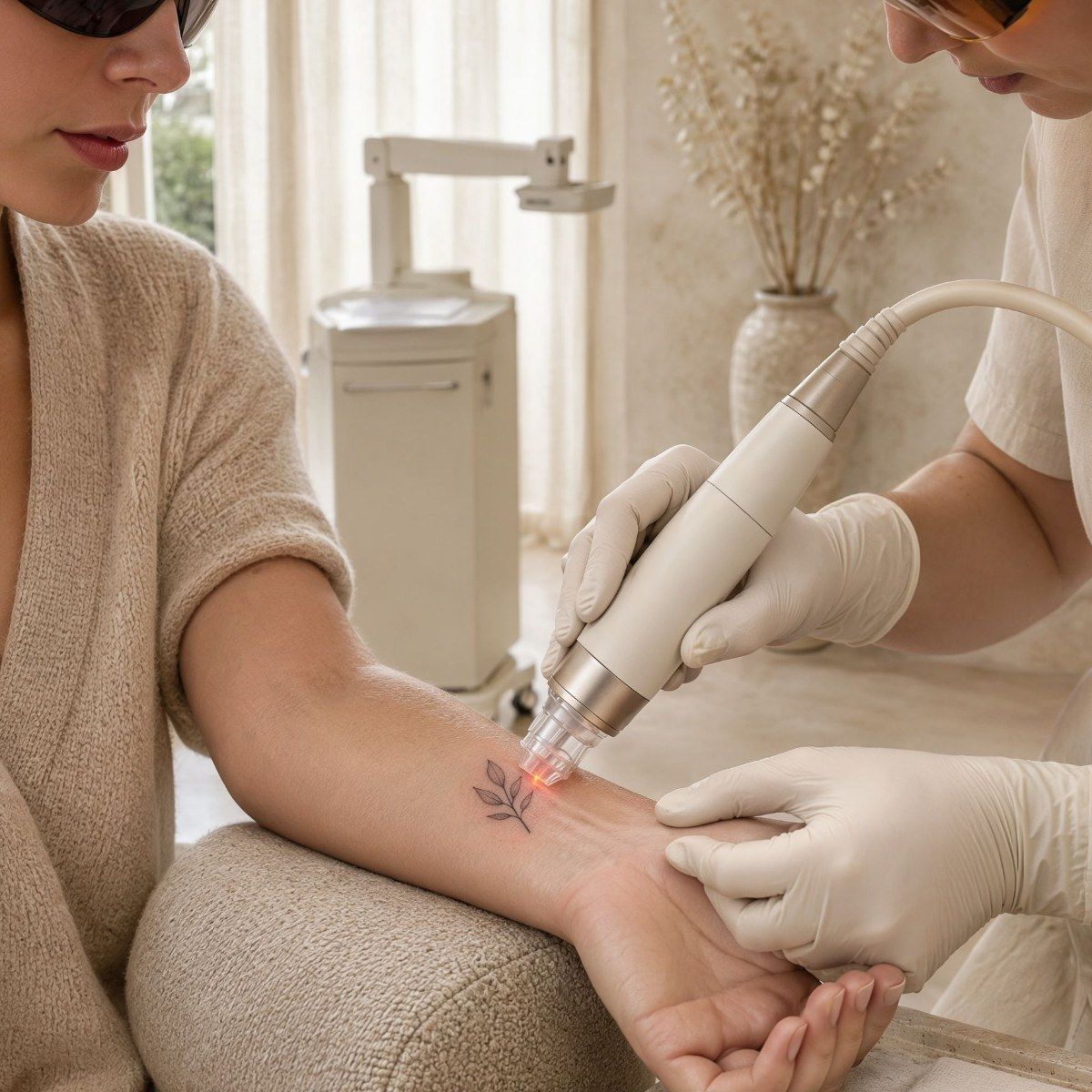
Tattoo removal uses picosecond and nanosecond lasers to break tattoo ink into fine particles that the body clears naturally. The number of sessions and the laser settings depend on the tattoo's colours, size and depth.
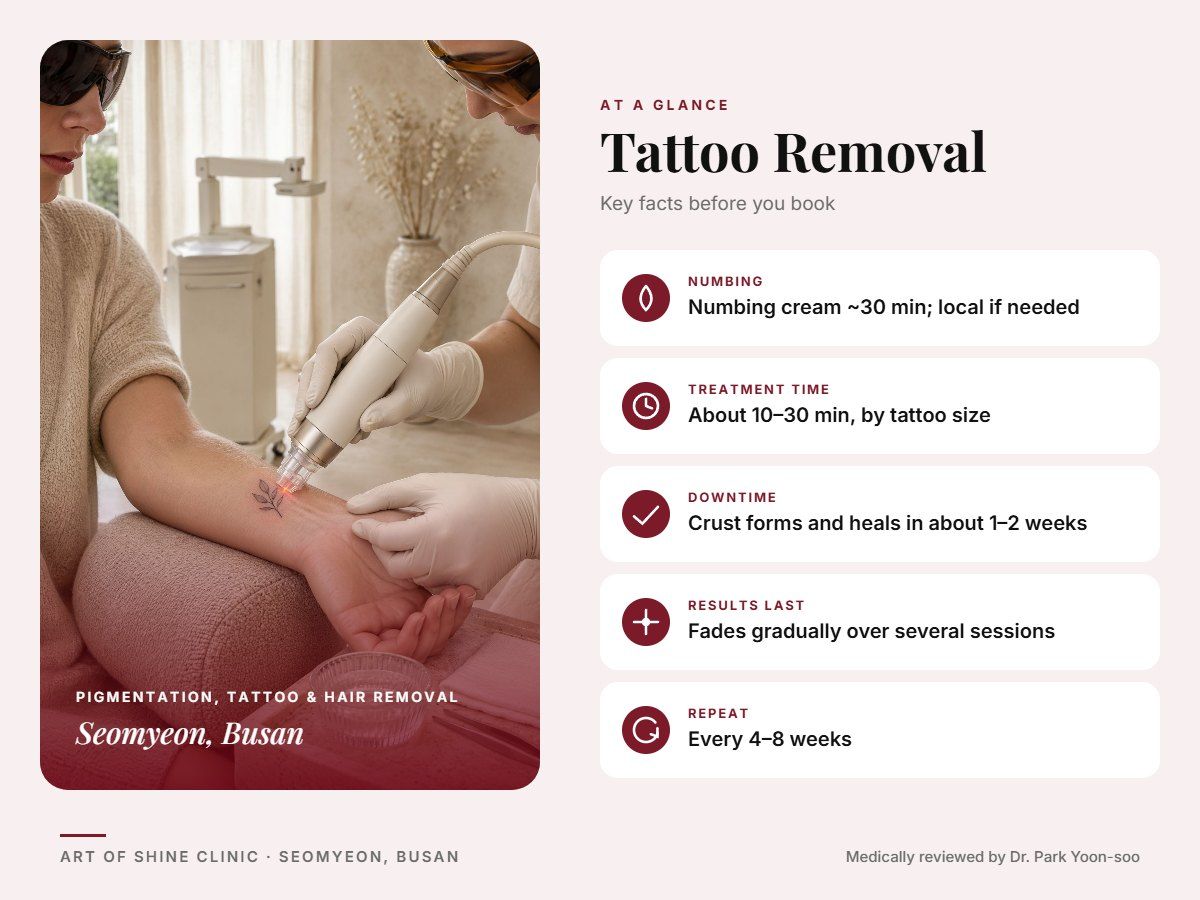
Quick answer: Laser tattoo removal uses picosecond and nanosecond laser pulses to shatter tattoo ink into tiny particles that your immune system gradually clears. At Art of Shine Clinic in Seomyeon, Busan, a session takes about 10–30 minutes after numbing cream, and a crust heals over 1–2 weeks. Most tattoos fade over several sessions every 4–8 weeks, depending on colour and depth. A coin-sized area starts from KRW 30,000 per session (excl. 10% VAT).
At a glance
Numbing
Treatment time
Downtime
Results last
Repeat
✔ Medically reviewed byDr. Park Yoon-soo, Head Director, Art of Shine Clinic · Last reviewed:

What is Tattoo Removal?
Tattoo ink particles are too large for the body to remove on its own. Very short laser pulses heat and shatter the ink into much smaller fragments, which immune cells then carry away over the following weeks. Picosecond lasers produce especially fine fragments, while nanosecond lasers remain useful for many inks; your doctor chooses the settings for your tattoo.
Black and dark blue inks usually respond best. Colours such as green, light blue and yellow, and dense professional tattoos, often need more sessions, and complete clearance is not always possible. Fading a tattoo before a cover-up or removing part of a design is also an option. The same picosecond technology is used at low energy in Pico Toning.
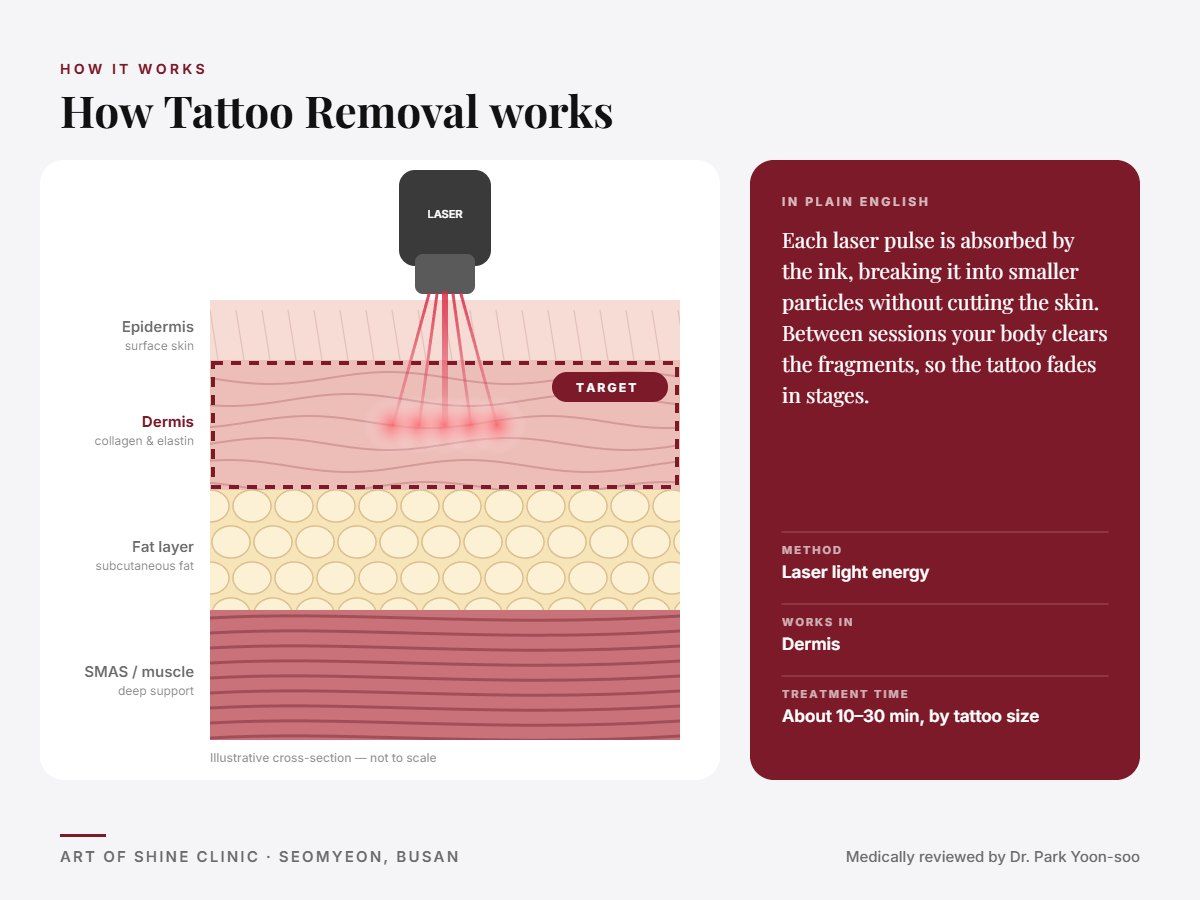
How Tattoo Removal works
Each laser pulse is absorbed by the ink, breaking it into smaller particles without cutting the skin. Between sessions your body clears the fragments, so the tattoo fades in stages. Waiting 4–8 weeks between sessions gives the skin time to heal and the ink time to clear.
- Consultation: your doctor assesses the tattoo's colours, size, depth and your skin, and explains the likely number of sessions.
- Treatment: after about 30 minutes of numbing cream (or local anaesthesia for some areas), the laser is passed over the tattoo for about 10–30 minutes.
- After: the area is cooled and dressed with ointment, and you book your next session in 4–8 weeks.
Why patients choose Tattoo Removal
- Two laser types — picosecond and nanosecond lasers for different inks.
- Tailored settings — adjusted to each tattoo's colours and depth.
- Full or partial removal — clear a whole design, part of it, or fade it for a cover-up.
- Short sessions — usually about 10–30 minutes depending on size.
Who is Tattoo Removal for — and when we suggest something else
Good candidates
- People with an old or unwanted tattoo they want to fade or remove.
- People who want to lighten a tattoo before a cover-up or redesign.
- People with small tattoos, such as initials or symbols, on the wrist, ankle or neck.
- People with dark black or blue ink, which usually responds more readily than some colours.
- Anyone ready to commit to several sessions spaced 4–8 weeks apart.
We may suggest something else if…
- You have a fresh tattoo that has not fully healed. We usually wait until the skin has completely recovered.
- You have a recent tan or sunburn over the tattoo. We may postpone until it settles.
- Your concern is pigment from sun or melasma, not ink. Pico Toning is designed for that.
- The mark is a mole or brown spot that looks like a small tattoo dot. Mole Removal or Age Spot Removal may fit better.
- You have a skin infection or broken skin over the tattoo. Treatment waits until it has healed.
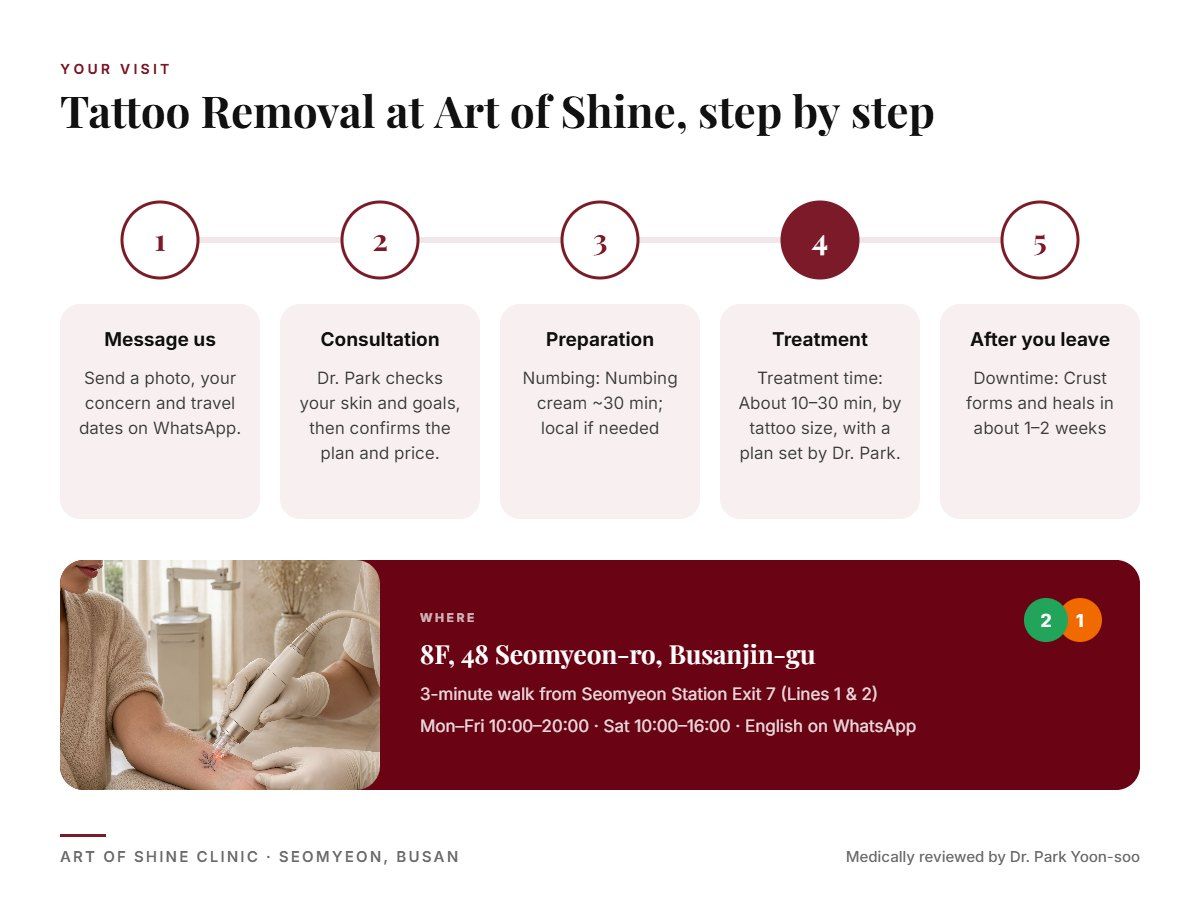
What happens at your Tattoo Removal session in Seomyeon
- Message us on WhatsApp first. Send a clear photo of the tattoo with a coin or ruler for size. Tell us its age, colours and whether it was professional.
- Consultation with Dr. Park. She checks ink colour, density and depth and your skin tone. She then gives a realistic estimate of sessions.
- Preparation and numbing. Numbing cream is applied for about 30 minutes. Local anaesthesia may be used for some areas or larger tattoos.
- The treatment. The laser passes over the ink for about 10–30 minutes, depending on size. It feels like quick snaps of heat, and the ink often turns white briefly.
- Out the door and follow-up. A crust forms and heals over about 1–2 weeks. Plan the next session in 4–8 weeks, and message us if blisters or swelling concern you.
How Dr. Park plans your tattoo removal treatment
Matching the laser to the ink
We use picosecond or nanosecond lasers to break ink into fine particles. The body then clears these particles over the following weeks. Dr. Park chooses settings by ink colour, density and depth, and by your skin tone.
Pricing by size
Our listed prices are per session by area. A tattoo about the size of a KRW 500 coin and a business card-sized area are priced separately. Larger tattoos are quoted after Dr. Park sees them.
Pacing sessions
Sessions are spaced every 4–8 weeks. This gives the skin time to heal and the body time to clear ink. Rushing sessions does not speed up fading and can raise the risk of scarring.
Tattoo Removal results: what to expect and when
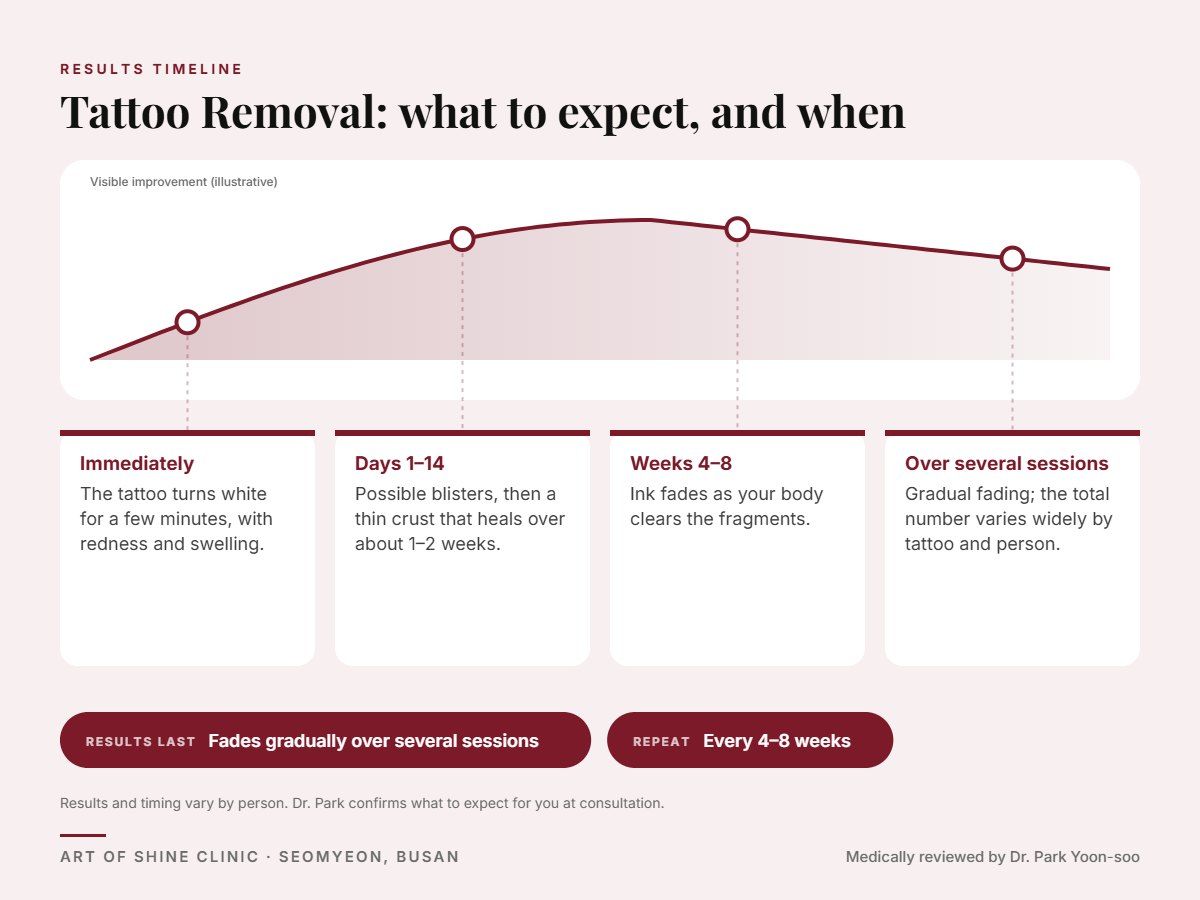
- Immediately: the tattoo turns white for a few minutes, with redness and swelling.
- Days 1–14: possible blisters, then a thin crust that heals over about 1–2 weeks.
- Weeks 4–8: ink fades as your body clears the fragments.
- Over several sessions: gradual fading; the total number varies widely by tattoo and person.
Side effects, risks and who should avoid Tattoo Removal
Laser tattoo removal is a well-established treatment. Possible side effects include:
- Redness, swelling, pinpoint bleeding and blistering (usually settle within days)
- Crusting and itching while the skin heals
- Temporary darkening or lightening of the skin
- Rarely, scarring, texture change, or darkening of skin-tone, white or red cosmetic inks
Not suitable if you: have tanned or sunburnt skin over the tattoo; have an active infection or wound in the area; are pregnant; tend to form keloid scars; or have recently taken isotretinoin. Tell your doctor about any allergy to tattoo ink or past reactions in the tattoo.
Tattoo Removal vs Pico Toning and Mole Removal: which should you choose?
These lasers target different kinds of pigment.
| Treatment | How it works | Best for | Downtime | Results last |
|---|---|---|---|---|
| Tattoo Removal | Picosecond or nanosecond laser breaks tattoo ink into fine particles | Professional or amateur tattoos, partial removal | Crust healing over about 1–2 weeks | Gradual fading over repeated sessions |
| Pico Toning | Low-energy picosecond pulses across the face | Melasma, blemishes and dull tone | None; return to daily life immediately | Varies by person; sessions every 2–4 weeks |
| Mole Removal | CO2 laser removes the mole layer by layer | Individual moles | Small scabs for about 1–2 weeks | Semi-permanent; retreat if pigment returns |
Choose Tattoo Removal for ink placed in the skin. Choose Pico Toning for natural pigment across the face. Choose Mole Removal for a natural spot that only looks like a tattoo dot.
Aftercare after Tattoo Removal
- Do not pick the scab that forms after treatment; let it fall off naturally.
- Avoid soaking the treated area in water for a few days.
- Apply sunscreen thoroughly after treatment.
- Avoid saunas, hot baths, strenuous exercise and alcohol while the skin heals.
- Temporary swelling or blistering can occur as the ink clears.
Travelling? Read our aftercare tips for travellers.
Downtime after Tattoo Removal, and flying home
Right after treatment, the area is red, slightly swollen and may feel like a sunburn. Small blisters or pinpoint bleeding can appear in the first day or two. A crust then forms and heals over about 1–2 weeks. Keep it covered, avoid direct water on it for a few days, and do not pick it.
Avoid saunas, jjimjilbang, hot baths, swimming, hard exercise and alcohol while it heals. Keep the area out of the sun. Walking and sightseeing are fine with the area covered. Flying is generally fine, but tell Dr. Park your flight date. Large tattoos are often treated early in your trip. See our aftercare tips for travellers.
Tattoo Removal prices in Busan (KRW)
| Package | Regular | Price |
|---|---|---|
| Tattoo Removal (Area the Size of a KRW 500 Coin) – 1 Session Autumn Event |
KRW 30,000 47% off | |
| Tattoo Removal (Business Card-Sized Area): 1 Session AOS Skin Package |
KRW 190,000 44% off |
Listed amounts are non-covered treatment fees in Korean won (KRW) and exclude 10% VAT. Payment is made at the clinic on the day of your visit. Costs may vary with the treatment area and dosage, and results, recovery time and side effects differ from person to person. Details are explained during an in-clinic consultation. Event prices and periods change — please confirm on WhatsApp when you book. Prices checked: October 2026.
Full price list → · Current special offers → · How prices & payment work →
How many sessions does it take to remove a tattoo completely?
There is no fixed number, and complete removal cannot be promised. Small, dark or amateur tattoos often fade faster. Large, dense, multicoloured professional tattoos usually need many sessions.
Ink depth, colour, tattoo age and location all matter. Areas further from the heart, such as ankles, can clear more slowly. Each session is spaced 4–8 weeks apart, so full removal can take many months. Dr. Park gives an estimate at consultation and updates it as the ink responds. Photos after each session help track progress.
Which tattoo colours are hardest to remove?
Black and dark blue ink generally respond well to laser energy. Some colours, such as green, light blue and yellow, can be more stubborn. Some white and skin-toned inks may darken when treated.
The laser works by matching energy to the colour that absorbs it. A tattoo with many colours may need several different settings. Dr. Park checks the colours at your consultation. She will explain which parts are likely to fade well and which may only lighten.
Can laser tattoo removal leave a scar?
Laser tattoo removal aims to fade ink without scarring, but some risk remains. Lighter or darker patches can occur, especially in darker skin or after sun exposure. These often improve over months but may persist.
Scarring risk rises if blisters are picked, the area becomes infected, or sessions are too close together. Some tattoos also carry scarring from when they were made. Dr. Park checks for this before treatment. Following aftercare and keeping the area out of the sun matters as much as the laser itself.
Can I partially remove a tattoo before a cover-up?
Yes. Many people fade a tattoo so an artist can design over it more freely. This usually needs fewer sessions than full removal. You only need the old ink light enough not to show through.
Tell Dr. Park your goal at the consultation, and share any design plan from your artist. She can focus on the darkest parts. Allow the skin to heal fully after your last laser session before getting a new tattoo. Ask your tattoo artist how long they prefer to wait.
Tattoo Removal FAQ
How much does tattoo removal cost in Busan?
At Art of Shine Clinic in Seomyeon, one session for a tattoo about the size of a KRW 500 coin is KRW 30,000. A business card-sized area is KRW 190,000 per session (excl. 10% VAT). Larger tattoos are quoted after the doctor sees them.
Does laser tattoo removal hurt?
It feels like quick snaps of heat on the skin. Numbing cream is applied for about 30 minutes beforehand, and local anaesthesia can be used for some areas or larger tattoos. Cooling during and after treatment also helps.
How many sessions does tattoo removal take?
It varies widely. Small, dark or amateur tattoos may fade in fewer sessions. Large, colourful or dense professional tattoos often need many sessions spaced 4–8 weeks apart. Your doctor gives an estimate at consultation, but complete removal cannot be promised.
Can I go sightseeing, swim or fly after tattoo removal?
You can go out and fly, but keep the area covered, clean and out of the sun. Avoid swimming, saunas, hot baths and soaking the area until it has healed, usually about 1–2 weeks. Do not pick blisters or crusts.
What is the difference between tattoo removal and Pico Toning?
Both can use picosecond lasers. Tattoo removal uses higher energy focused on the ink, causing a crust and needing sessions every 4–8 weeks. Pico Toning uses low energy across the face to even out pigment and tone, with no downtime.
Who performs tattoo removal at Art of Shine Clinic?
Dr. Park Yoon-soo, our Head Director, assesses the tattoo and sets the laser plan. She graduated from Kyungpook National University School of Medicine and completed her internship at Asan Medical Center.
Can I remove a tattoo during a short trip to Busan?
You can have a session during a short stay, but most tattoos need several sessions 4–8 weeks apart. Plan return visits, and tell us your dates on WhatsApp so we can schedule early in your trip.
Do I need a consultation before my first session?
Yes. Dr. Park checks the tattoo before any treatment. Ask on WhatsApp whether your first session can follow in the same visit. Send a photo with a size reference so we can give a quote in advance.
Related treatments
- Age Spot Removal — targeted removal of sun spots
- Brighton Toning — laser toning for a more even tone
- Clarity II — dual-wavelength laser for hair and pigment
- Excel V — laser care for redness and visible vessels
- Pico Toning — picosecond laser for pigment and tone
See all Pigmentation, Tattoo & Hair Removal or browse all 98 treatments.
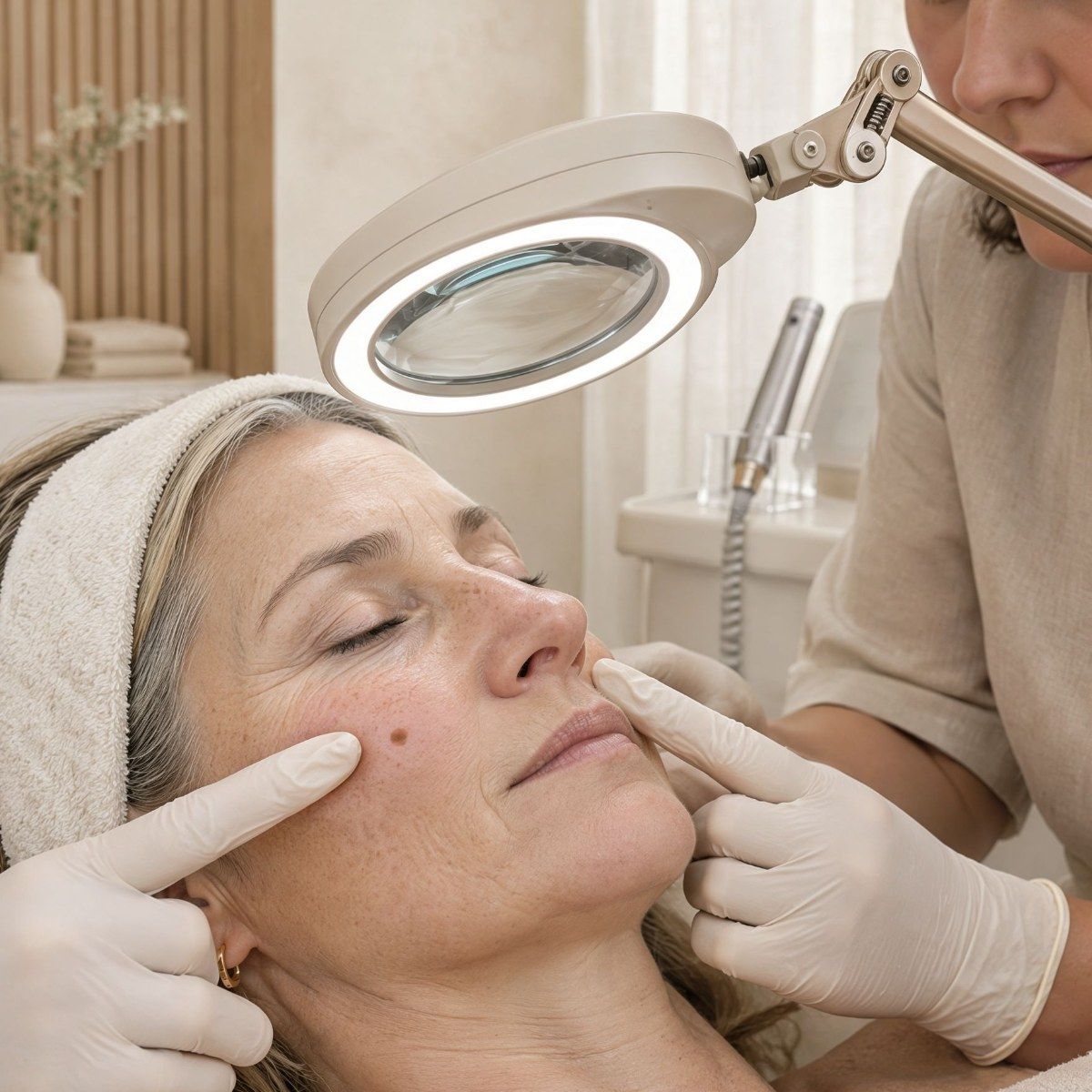
Age Spot Removal

Brighton Toning

Clarity II
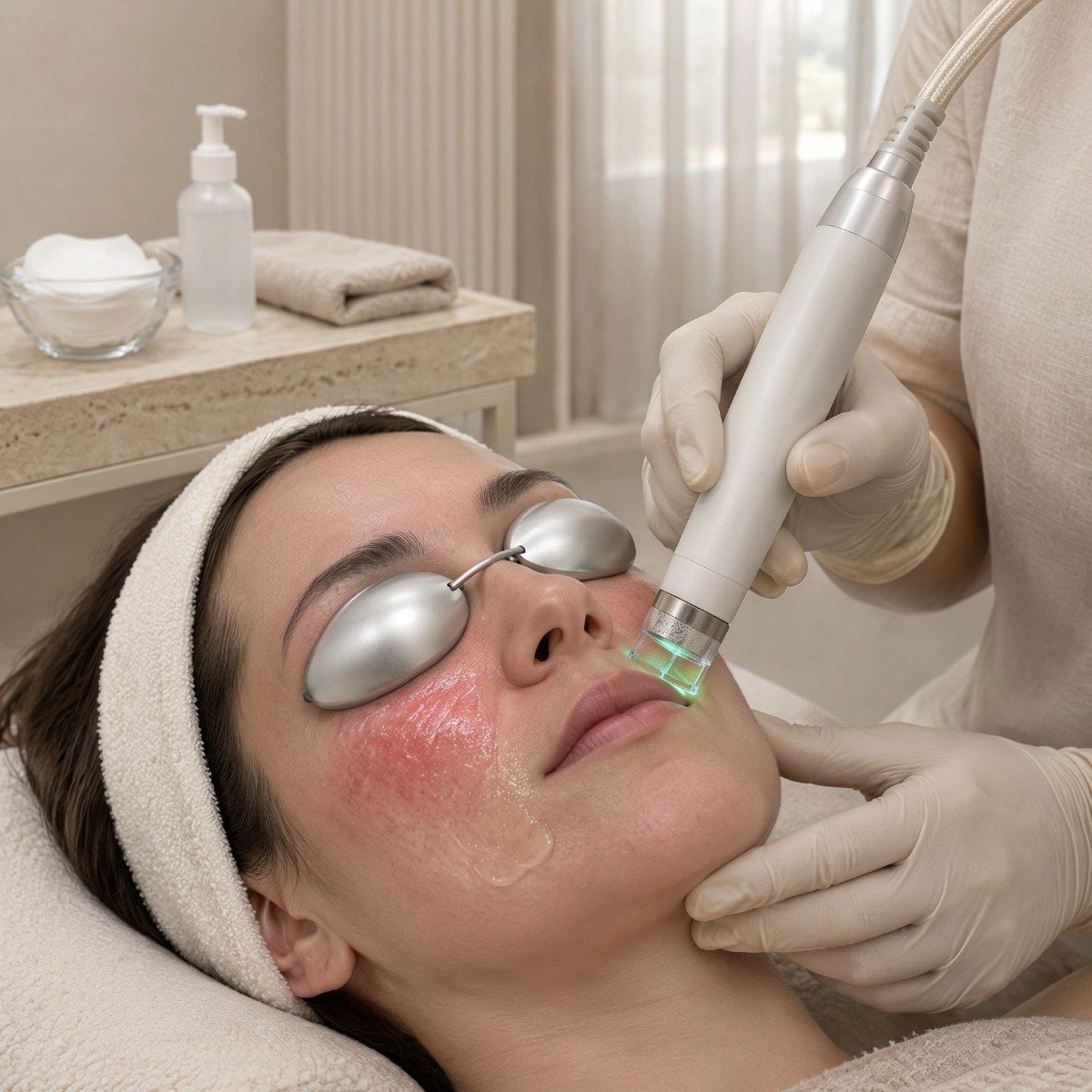
Excel V
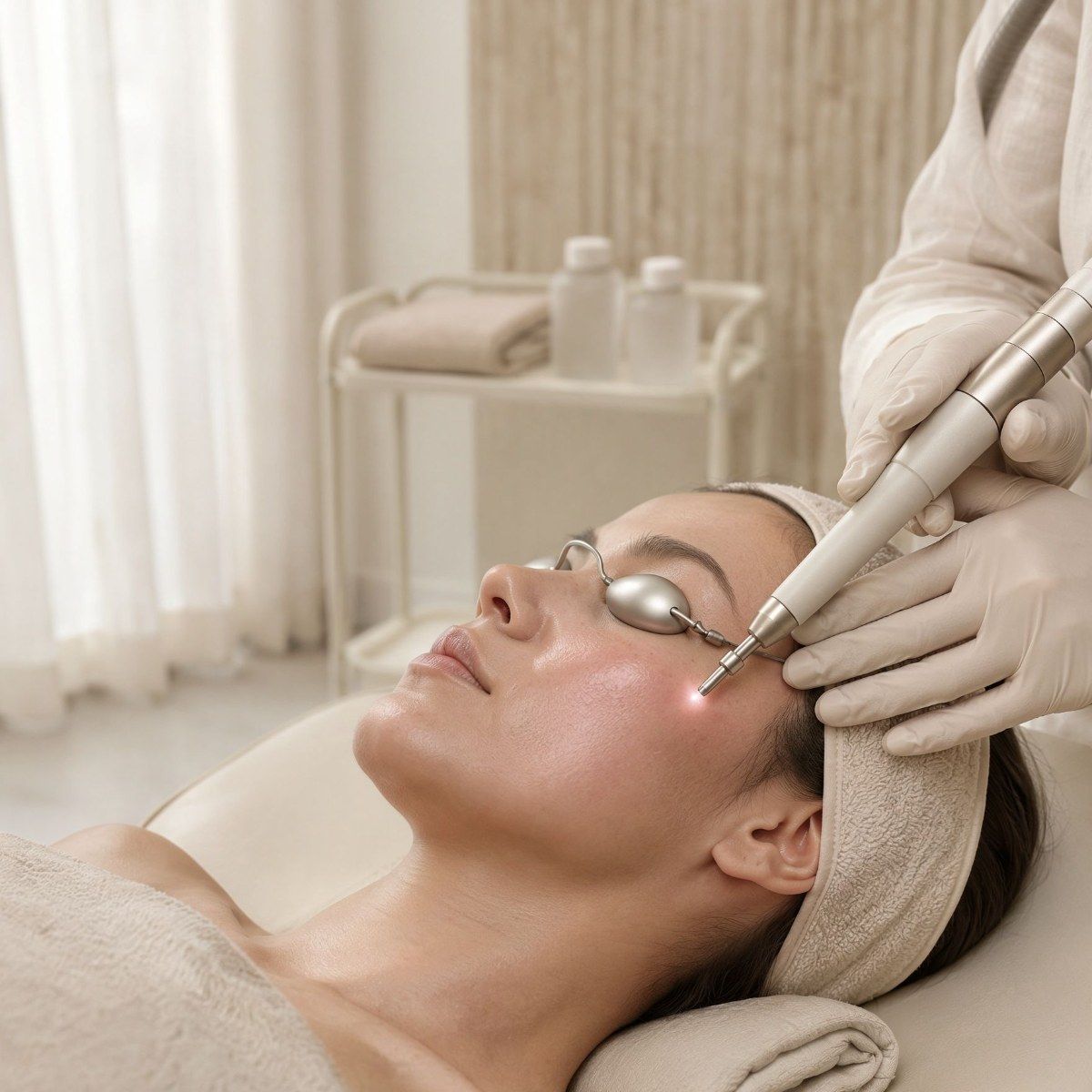
Helios 4

Laser Hair Removal (Female)
Laser Hair Removal (Male)
Milia, Skin Tags & Warts Removal

Medically reviewed by
Dr. Park Yoon-soo— Head Director, Art of Shine Clinic Busan
Medical graduate of Kyungpook National University School of Medicine, intern at Asan Medical Center. Rejuran and Rejuviel Expert Member (PharmaResearch), Restylane Expert Member (Galderma), Belotero Key Doctor (Merz Korea) and 2026 Coretox Expert. Member of the Korean Aesthetic Surgery & Laser Society and the Korean Society for Laser, Dermatology and Trichology.
This page is for general information and does not replace an in-person medical consultation. Results, recovery time and side effects vary from person to person.
Ready to plan your visit?
Send one WhatsApp message with the treatment and your travel dates. We reply during clinic hours (KST): Mon–Fri 10:00–20:00, Sat 10:00–16:00.